World champions, and once again centre stage in the closing week of the 2026 World Cup. The Argentina collection, La Albiceleste, has been among the tournament's most beautiful kits for generations, and right now the sky blue and white is in higher demand than ever. This is your complete guide: the home jersey, the away shirt, the stars and the right size.
Quick Answer: Argentina's 2026 World Cup home jersey is sky blue and white striped with three stars above the crest, the away shirt is dark blue. Argentina came through Group J, beat Egypt 3-2 and Switzerland 2-0 and faced England in the semi-final. You can buy the home and away shirts on our Argentina page, with delivery to the Netherlands and Belgium.
Why does everyone want an Argentina jersey right now?
Argentina are in the closing week of the 2026 World Cup and you can see it instantly in the demand for shirts. The reigning world champions won their round of 16 tie against Egypt 3-2, knocked out Switzerland 2-0 in the quarter-final and then faced England in the semi-final, a classic billed for weeks as the clash of the tournament. The final is played on Sunday 19 July 2026. Whoever lifts the trophy, this is a jersey you will wear for years.
Follow the full endgame in our analysis of the 2026 World Cup semi-finals and our guide to the 2026 World Cup final, schedule included.
What does the Argentina home jersey look like?
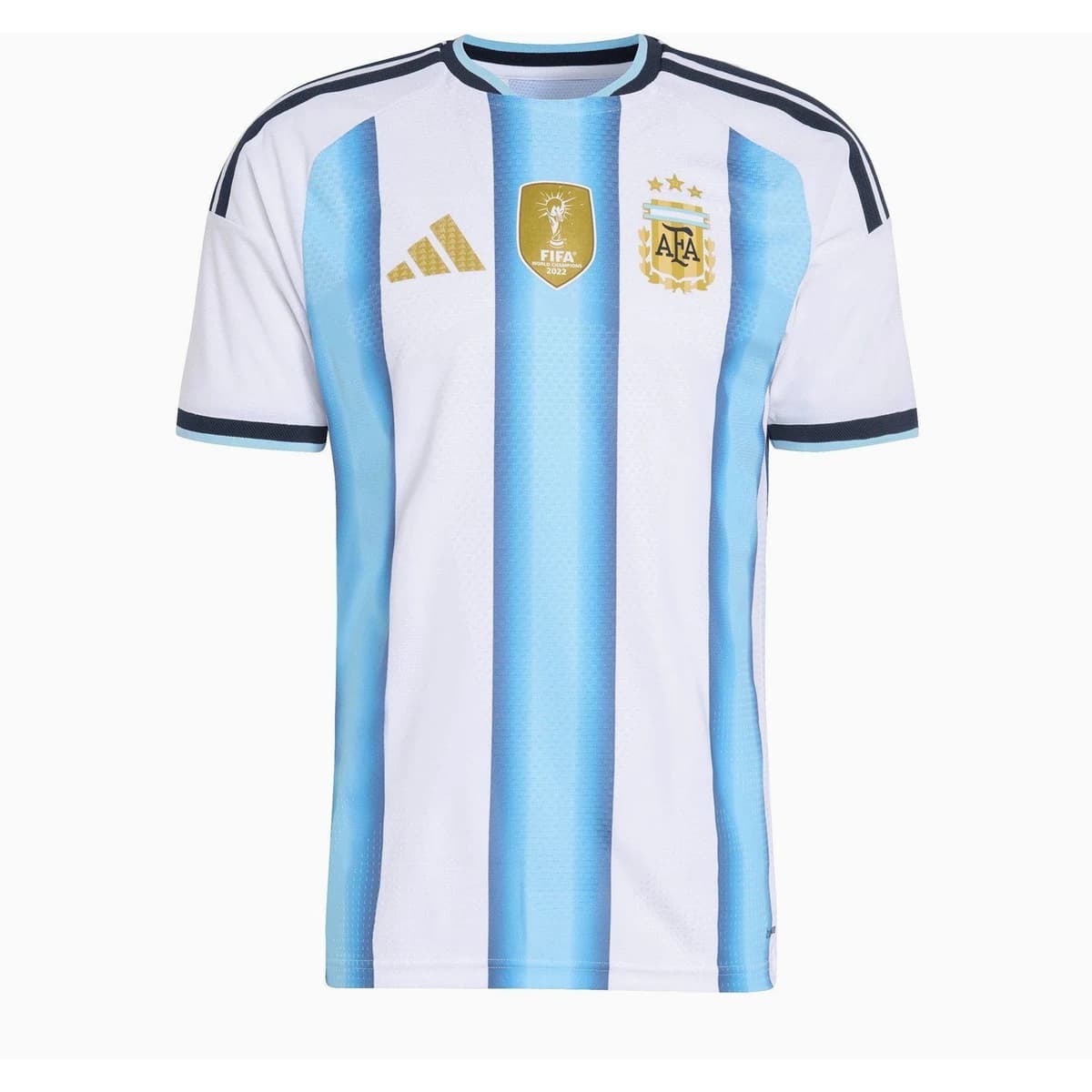
The home jersey carries the unmistakable sky blue and white vertical stripes, with white shorts. Above the crest sit three stars for the world titles of 1978, 1986 and 2022. It may well be the most iconic kit in world football: just as strong in a packed stand as on the street. The fabric is light and breathable, exactly what you want on a long World Cup night.
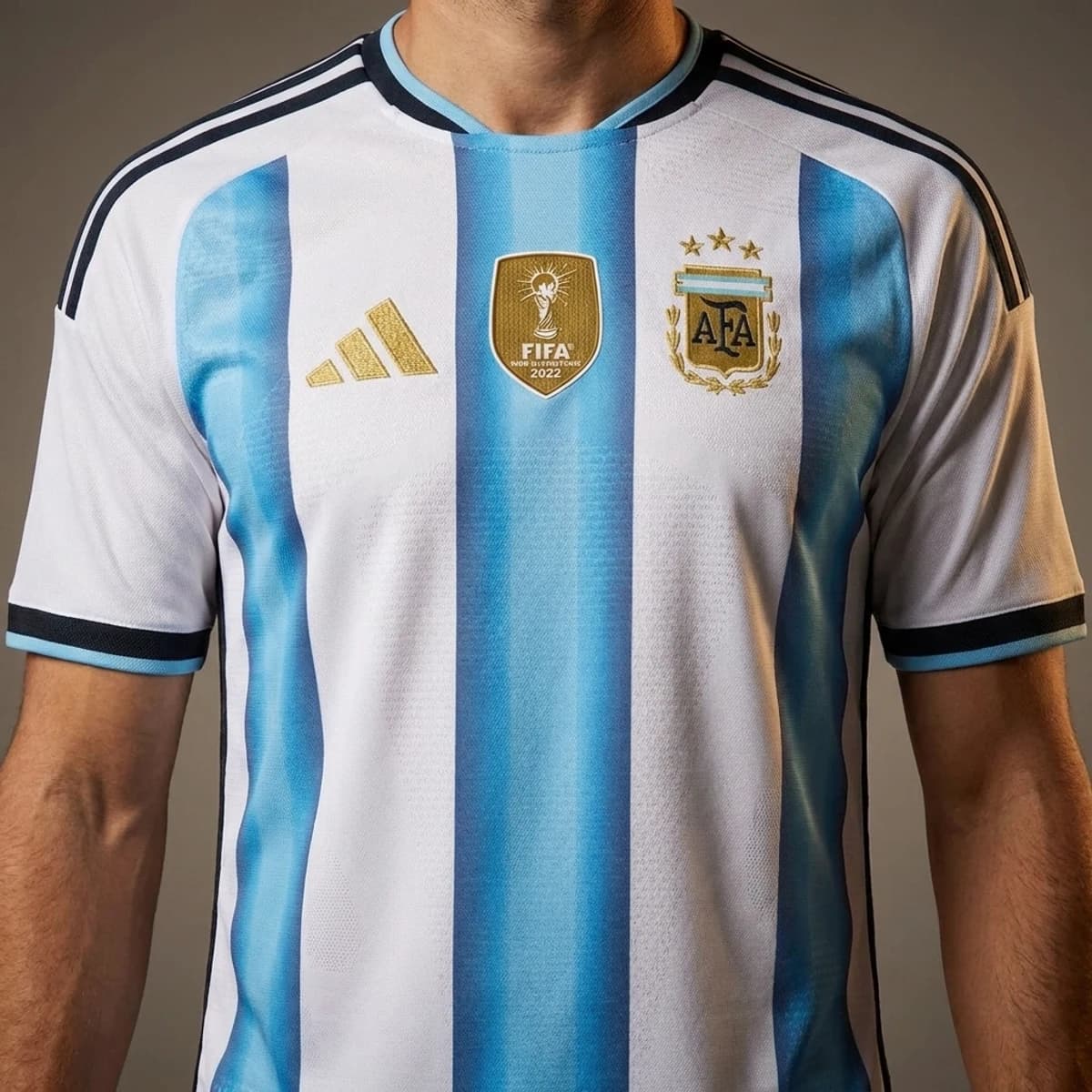
What does La Albiceleste mean?
La Albiceleste literally means 'the white and sky blue', from the Spanish albo (white) and celeste (sky blue). The nickname points straight at the colours of the shirt and the Argentine flag. Few nations are as recognisable by their kit, and that is exactly what makes this shirt a collector's classic.
What does the Argentina away shirt look like?
The away shirt is dark blue, Argentina's traditional alternative and a stylish counterpart to the light home jersey. If you prefer something more understated than the stripes, the Argentina away shirt is the one you will keep wearing after the tournament.
Who are Argentina's star players?
Lionel Messi remains the face of the team and was decisive again in the knockout stage. Around him stands a champion generation including Cristian Romero and Enzo Fernández, who both scored in the thrilling round of 16 win over Egypt. That mix of experience and hunger is what makes Argentina so dangerous at every tournament, and keeps the number 10 so popular on the back.
Which size Argentina jersey should I pick?
The shirts have a regular fit, so your usual size is normally the right call. If you are between two sizes, check our size guide. It lists chest width and length per size, so you get it right first time and skip the hassle of exchanges.
Where can I buy the Argentina World Cup 2026 jersey?
You order the Argentina home jersey and the away shirt directly from us, along with scarves, caps and bundles from the Argentina collection. Order before 23:59 on a working day and your parcel arrives the next working day in the Netherlands and Belgium, if in stock and if the carrier collects on time.
Sky blue and white with three stars, support La Albiceleste in style.
Shop the Argentina collection* Besteld vóór 23:59 op een werkdag? Dan ligt je bestelling de volgende werkdag in huis in Nederland en België — mits het artikel op voorraad is en de vervoerder (PostNL/DHL) op tijd ophaalt. Voor de overige EU-landen rekenen we doorgaans 2–4 werkdagen.